
Are Nicotine Free Vapes Safe?
Updated 2026-08-30
Nicotine free vapes are safer than nicotine vapes in one specific, meaningful way: they contain no addictive stimulant, so they cannot create dependence or add nicotine's load on heart rate and blood pressure. They are not safe in an absolute sense, because inhaling any heated aerosol of propylene glycol, vegetable glycerin, and flavorings carries risks that removing nicotine does not touch.
That two-part answer frustrates people who want a yes or a no, but it is the honest one, and it is consistent with how federal health agencies describe the category. Below we break down what is actually in the vapor, which risks disappear when nicotine goes to zero, which ones stay, and who should not be vaping anything at all.
The Short Answer: Safer Is Not the Same as Safe
Every credible discussion of this question starts from the same baseline: the safest option is not inhaling anything. The FDA regulates zero-nicotine e-liquids alongside nicotine products precisely because the delivery method itself, not just the drug, is what raises questions.
Within that reality, nicotine content is one of the biggest levers a vaper controls. Nicotine is the ingredient that drives addiction, and it is a stimulant with measurable cardiovascular effects. Take it out and the product loses its ability to hook you and to push your heart rate around. What is left is a flavor-delivery device with an unresolved long-term inhalation question mark. Calling that safe would be wrong. Calling it identical in risk to a 5% nicotine salt disposable would be wrong in the other direction.
What Is Actually in the Aerosol of a Nicotine Free Vape
A 0mg e-liquid has three main components. Propylene glycol (PG) and vegetable glycerin (VG) form the base that turns into visible vapor when heated. Both are common food additives considered safe to eat, but swallowing a compound and inhaling its heated aerosol are different exposures, and the inhalation data is far thinner. Flavorings make up the third component, and they are the least standardized: some flavor compounds that pass food-safety review have never been evaluated for repeated inhalation.
Heat adds one more variable. When a coil runs too hot or dry, base liquids can degrade into byproducts such as aldehydes. Well-made hardware keeps temperatures in the intended range, which is one reason device quality matters even when nicotine is off the table. NIDA's overview of vaping devices notes that aerosols can also carry trace substances from the device itself, another point in favor of reputable manufacturing over bargain-bin imports.
Labeling accuracy is its own risk line. When Devon's trading standards service tested vapes sold as nicotine-free, one in eight contained nicotine anyway. That is a UK sample, but the lesson travels: a 0% claim is only as good as the seller's verification, which is why we check the printed 0% marking on every SKU we stock.
Popular 0mg disposables from established brands
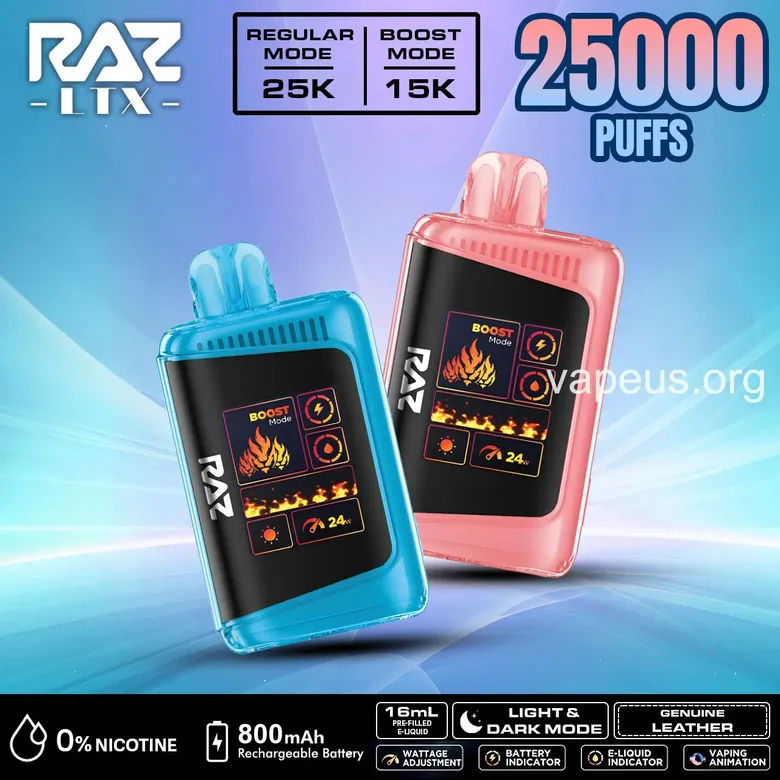
RAZ
RAZ LTX 25000 Zero Nicotine (DC25000)
- 25,000 puffs
- 0mg (0%)
- 16mL
In stock: Bangin Sour Berries New York Mint Razzle Dazzle Strawberry Burst
$23.99 View & buy
Are Non Nicotine Vapes Bad for You? What Goes Away and What Remains
The cleanest way to answer whether non nicotine vapes are bad for you is to split the risk ledger into the column nicotine owns and the column it does not.
| Risk | With nicotine | Zero nicotine |
|---|---|---|
| Addiction and dependence | Primary driver | Removed |
| Withdrawal symptoms (irritability, anxiety-like edginess) | Present between sessions | Removed |
| Stimulant effects on heart rate and blood pressure | Present with each dose | Removed |
| Adolescent brain development harm | Documented concern | Nicotine-specific harm removed; product still 21+ |
| Inhaled PG/VG and flavoring exposure | Present | Still present |
| Airway irritation from aerosol | Present | Still present |
| Unknown long-term inhalation effects | Present | Still present |
Read the table honestly and the pattern is clear. Zero nicotine clears the dependence and stimulant column entirely while leaving the aerosol column untouched. Whether that trade is worth it depends on where you are starting from, which is why the comparison in our low nicotine vs zero nicotine breakdown matters for anyone stepping down rather than jumping straight to 0mg.
Is Vaping Without Nicotine Safe Compared to Nicotine Vaping?
Compared directly against nicotine vaping, the zero-nicotine version drops the single ingredient federal health agencies flag most consistently. Nicotine is what makes e-cigarettes addictive, what produces withdrawal, and what acts as a stimulant on the cardiovascular system with every session. A vaper who moves from a 5% salt disposable to a 0mg equivalent has eliminated their daily nicotine intake completely, which is a real change, not a cosmetic one.
What has not changed is the act of inhaling a heated aerosol several hundred times a day. Nobody can currently tell you what twenty years of flavored PG/VG inhalation does to lungs, because the products have not existed long enough for anyone to measure it. That uncertainty applies to every strength, including zero. So the fair comparison reads: meaningfully reduced risk profile, same unresolved long-term question. Those weighing specific 0mg models against each other can start with the current lineup of nicotine-free disposable vapes.
Are Nicotine Free Vapes Safe for Pregnancy?
No. Pregnancy is the clearest bright line in this entire topic. Health guidance from the NIH's MedlinePlus is unambiguous that vaping is not safe during pregnancy, and that guidance does not carve out an exception for zero-nicotine liquids. The developing fetus is exposed to whatever crosses from the aerosol into the bloodstream, including flavoring compounds whose prenatal effects have never been studied.
The absence of nicotine removes one known fetal toxin, but it does not convert an inhaled chemical aerosol into something appropriate for pregnancy. Anyone who is pregnant, may be pregnant, or is trying to become pregnant should not use any vaping product at any strength, and should raise quitting options with their doctor or midwife rather than switching products.
Who Should Not Use a Zero Nicotine Vape at All
Some groups fall outside the reasonable audience for this product no matter how the safety math shakes out for adult vapers. Anyone under 21 is excluded by law and by biology; these are age-restricted products, full stop. Pregnant and breastfeeding women, as covered above. People with asthma, COPD, or other respiratory conditions, for whom any inhaled irritant is a bad bet. And non-vapers of every description: if you do not currently vape, a zero-nicotine device offers you nothing except new exposure, and starting makes no sense.
The realistic audience is narrow and specific: adult vapers who already use nicotine products and want the same ritual without the stimulant. Where that choice sits against every other option is ranked in our healthiest vape comparison. For that group, understanding exactly what these devices are, covered in our guide to what a nicotine-free vape is, is the right starting point before any purchase.
Nicotine free vape safety FAQ
Is nicotine free vape safe?
Not in an absolute sense. A nicotine free vape removes the addictive stimulant, which eliminates dependence risk and nicotine's cardiovascular effects, and that is a genuine reduction. But the aerosol still contains heated propylene glycol, vegetable glycerin, and flavorings, and the long-term effects of inhaling those remain unstudied. Health agencies describe zero-nicotine vaping as lower risk than nicotine vaping, never as safe.
Are no nicotine vapes bad for you?
They are not harmless. No nicotine vapes avoid the addiction and stimulant load that nicotine brings, which matters, but inhaling any flavored aerosol can irritate airways, and some flavoring compounds have food-safety approval without any inhalation testing. For a current nicotine vaper, switching to 0mg reduces exposure. For someone who does not vape, starting introduces risk where there was none.
Are zero nicotine vapes bad for you compared to regular vapes?
Zero nicotine vapes carry less risk than regular vapes because they cannot cause dependence, produce no withdrawal, and add no stimulant strain on heart rate or blood pressure. The remaining risks, aerosol exposure and unknown long-term inhalation effects, are shared by both. So they sit lower on the risk ladder than nicotine products while staying well above not vaping at all.
Is 0 nicotine vape safe for your lungs?
There is no evidence that any inhaled aerosol is safe for lungs, including 0mg vapor. PG and VG can dry or irritate airways in some users, flavorings are largely untested for inhalation, and overheated coils can generate degradation byproducts. What a 0 nicotine vape avoids is nicotine itself. Lung exposure to the base aerosol continues regardless of strength.
Are nicotine free vapes safe for pregnancy?
No. NIH health guidance states that vaping is not safe during pregnancy, and removing nicotine does not change that. The aerosol still delivers flavorings and other compounds with unknown prenatal effects. Anyone pregnant or trying to conceive should avoid all vaping products at every nicotine strength and talk with their doctor about quitting support instead of switching to a zero-nicotine device.
Should a non-vaper try a nicotine free vape?
No. The only defensible case for these products is an adult who already vapes nicotine and wants to keep the routine while dropping the drug. A non-vaper who starts gains nothing and takes on aerosol exposure they did not have. Every credible health source lands in the same place: if you do not vape, do not start, at any strength including zero.